Signs your roof has wind damage you can see from the ground
Most wind damage is visible from your yard. Here are the signs Wilkes-Barre homeowners can spot from the ground, and what each one means for your roof.
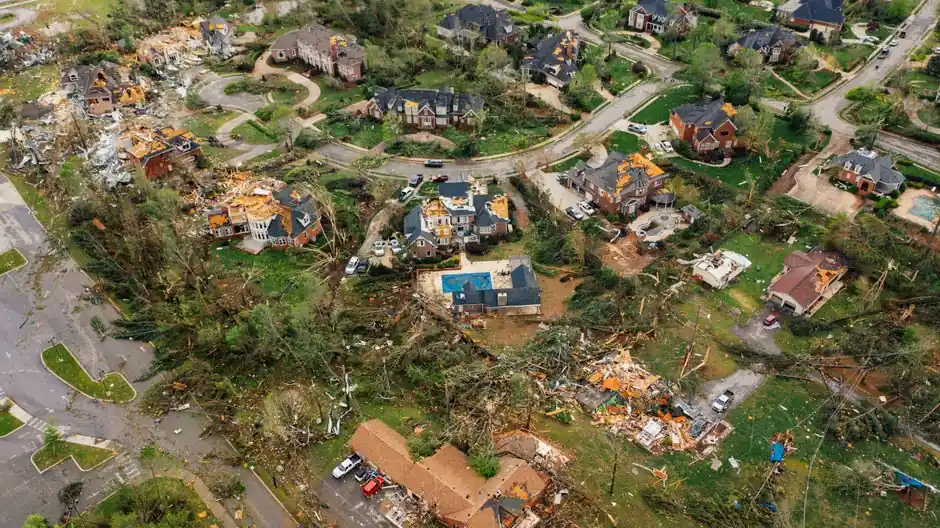
The fastest way to tell if your roof has wind damage is to look for shingles that are lifted, creased, or missing, dark patches where shingles used to sit, and piles of granules in your gutters or on the ground below downspouts. If you see any of those after a storm in Wilkes-Barre, you almost certainly have wind damage, even if no water is coming through the ceiling yet. This post walks through the signs your roof has wind damage Wilkes-Barre PA homeowners can spot from the ground, what each one means, and when it is worth calling someone out.
Wind rarely tears a roof apart in one gust. It works on the edges first, then the field, then the fasteners. By the time you notice a stain on the ceiling, the damage has usually been sitting up there for weeks.
What wind damage on a roof actually looks like
Wind damage on a roof is a mechanical failure of the shingle system, not a cosmetic issue, and it shows up as shingles that have lost their seal, their surface granules, or their grip on the deck. Asphalt shingles are held down two ways: by the nails or staples through the nail line, and by the thermal seal strip that bonds each shingle to the one below it after a few hot days. Wind gets under a lifted edge, pressurizes the cavity, and pops that seal. Once the seal is broken, the shingle flaps. Once it flaps, the nails start to wallow out. Once the nails wallow, the shingle leaves.
That whole sequence can happen in one storm or over three. It depends on wind speed, direction, and how old the roof is.
Three things determine how bad it gets:
- Wind speed and gust duration. Sustained 40 mph winds do less damage than a 60 mph gust that lasts 30 seconds, because gusts create the pressure differential that lifts shingles.
- Roof age. A shingle older than 12 years has a weaker seal strip and more brittle mat, so it fails faster.
- Exposure. Ridges, hips, gable ends, and the first three feet up from the eave take the most wind. That is where we find damage first on almost every roof we inspect.
What are the signs of wind damage you can see from the ground in Wilkes-Barre PA?
The signs of wind damage you can see from the ground in Wilkes-Barre PA are lifted or missing shingles, granule piles, bent or pulled flashing, dented gutters, and shingle tabs sitting in the yard. You do not need to climb a ladder to find most of them. Stand back 30 to 40 feet from the house, ideally with the sun behind you, and work the roof line left to right.
Lifted, creased, or missing shingles
A lifted shingle looks like a small tent or a wave along the roof plane. A creased shingle looks like a folded piece of paper that was flattened back out. Both mean the seal is broken. Missing shingles leave a dark rectangle where the black underlayment or decking shows through. On a typical Wilkes-Barre ranch or two-story, you can usually spot missing tabs from the driveway without binoculars.
Granule piles in gutters and at downspout outlets
Asphalt shingles are covered in mineral granules that protect the asphalt from UV. Wind scours those granules off the windward side of the roof. If you see a line of black grit in the gutter or a small pile of sand-colored granules at the bottom of a downspout after a storm, the shingles above it lost their armor. Granule loss alone is not a leak, but it shortens the life of the shingle by years.
Bent, lifted, or missing flashing
Flashing is the metal that seals the roof at chimneys, sidewalls, valleys, and vents. Wind grabs the exposed edge of flashing and peels it back. Look for metal that is no longer flat against the shingle, a gap at the base of the chimney, or a piece of step flashing hanging loose. This is one of the most common entry points for water after a wind event, and it is why we treat Roof Flashing Repair Wilkes-Barre PA as a same-week priority, not a wait-and-see item.
Dented gutters and downspouts
Wind-blown debris, not the wind itself, dents aluminum gutters. A branch, a piece of siding, or a chunk of someone else's roof hits the gutter and creases it. A dented gutter still drains, but the hanger behind it may be pulled loose, which means the gutter is now sagging away from the fascia and water is running behind it instead of into it.
Shingle tabs and debris on the ground
Walk the perimeter of the house after any storm with gusts over 50 mph. Shingle tabs, pieces of ridge cap, and torn underlayment on the lawn are the clearest evidence you will get. If you find them, the roof has already lost material, and the next rain is going into the deck.
How to check your roof for wind damage from ground level
You can check your roof for wind damage from ground level in about 10 minutes with no ladder and no tools. Do it in daylight, from at least three angles, and write down what you see so you are not relying on memory when you call someone.
- Walk the perimeter. Start at the front door and circle the house. Look up at the eave line the whole way. Note any shingle that is not lying flat.
- Check the four corners. Gable ends and hip corners take the most wind. Look for lifted tabs and exposed nail heads.
- Look at the ridge. Ridge cap shingles are the first to go in a high-wind event because they are the most exposed. A missing ridge cap leaves a visible gap along the top of the roof.
- Scan the gutters. From the ground, you can see if a gutter is pulling away from the fascia or sagging in the middle. Both point to wind or debris impact.
- Check the ground below downspouts. Granules and shingle fragments collect there.
- Look at the chimney and vents. Any gap between the flashing and the masonry is a leak waiting for the next rain.
If you want a second set of eyes on it, our team handles Roof Leak Detection and Inspection Wilkes-Barre PA and can tell you in one visit whether you are looking at a repair or a replacement.
Why Wilkes-Barre roofs take wind damage differently
Wilkes-Barre sits in the Wyoming Valley, and the valley shape does two things to wind. First, it channels gusts down the Susquehanna corridor, so a storm that produces 45 mph winds in the surrounding hills can push 60 mph through the city. Second, the older housing stock - a lot of it built between 1900 and 1950 in neighborhoods like Parsons, Miners Mills, and the Heights - was framed before modern wind bracing was standard. Those roofs flex more under load.
Add the freeze-thaw cycle. From November through March, we get repeated cycles of melting snow and refreezing. That cycle works water into any gap wind opened up, then expands it into ice. A lifted shingle in October becomes a cracked shingle by February.
We also see a specific pattern in the valley: wind-driven rain from the southwest pushes water under the bottom edge of shingles on the northeast-facing slopes. Homeowners on those slopes often have damage they cannot see from the front yard. Walk the back of the house too.
If you own a flat or low-slope roof - common on the commercial blocks downtown and on some mid-century homes - the failure mode is different. Wind gets under the membrane at the edges and peels it back. That is a job for Flat Roof Leak Repair Wilkes-Barre PA, not a shingle patch.
What to watch out for when you inspect
The biggest mistake homeowners make after a wind event is assuming no leak means no damage. A lifted shingle can sit there for months before the first hard rain finds it. By then, the decking underneath is wet, and the repair is three times the cost.
Other things to avoid:
- Do not climb the roof. A wind-damaged roof is unpredictable. Shingles that look solid can slide under your weight. Stay on the ground.
- Do not pressure-wash the roof. It strips the remaining granules and turns a repairable shingle into a replacement.
- Do not patch one shingle and call it done. If one tab lifted, the ones around it lost their seal too. Patch the whole area.
- Do not wait for the insurance adjuster before you stop the water. You are responsible for mitigating further damage. A tarp now is cheaper than a ceiling later.
- Do not ignore the soffit and fascia. Wind pulls those loose too, and an open soffit lets water and pests into the attic.
If you are not sure whether what you are seeing is wind damage or just an old roof, that is a five-minute conversation. Our team has been on roofs across Emergency Roof Repair in Wilkes-Barre long enough to know the difference on sight.
When to call a professional
Call a professional the same day you find missing shingles, exposed decking, or water staining on an interior ceiling. Those are not DIY repairs. A missing shingle means the deck is open to rain, and once the deck is wet, you are looking at Roof Decking Repair Wilkes-Barre PA in addition to the shingle work.
Call us sooner if any of these are true:
- You can see daylight through the roof boards from inside the attic.
- Water is dripping or staining a ceiling, even a small brown ring.
- A whole section of shingles is gone, not just one or two tabs.
- The chimney flashing is visibly separated from the masonry.
- A tree limb is resting on the roof, even if it looks light.
Wilkes-Barre Roof Repair Pros handles wind damage every week in this valley. We will tell you honestly whether you need a repair, a tarp, or a full replacement, and we will not sell you a roof you do not need.
Frequently Asked Questions
What are signs of wind damage on a roof in Wilkes-Barre PA?
The main signs are lifted, creased, or missing shingles; granule piles in gutters and at downspout outlets; bent or pulled flashing; dented gutters; and shingle tabs on the ground. In Wilkes-Barre, check the ridge, gable ends, and the northeast-facing slopes first, since those take the most wind in valley gusts.
Can I see wind damage from the ground in Wilkes-Barre Pennsylvania?
Yes. About 80 percent of wind damage is visible from 30 to 40 feet back with no ladder. Stand with the sun behind you, walk the full perimeter, and look at the eave line, ridge, and gutters. Only the field of the roof and the underlayment require a closer look from a professional.
How do I check my roof for wind damage in Wilkes-Barre PA?
Walk the perimeter in daylight, check all four corners and the ridge, scan the gutters for sagging or separation, and look below downspouts for granules and shingle fragments. It takes about 10 minutes. Write down what you find so you can describe it accurately when you call for an inspection.
Who inspects roof wind damage in Wilkes-Barre PA?
A licensed roofing contractor with storm-damage experience should inspect it. Wilkes-Barre Roof Repair Pros inspects wind damage across the city and can tell you in one visit whether you need a repair, a tarp, or a replacement. Most inspections take under an hour and you get a written scope before any work starts.
How long after a storm can I file an insurance claim for wind damage?
Most Pennsylvania policies allow up to one year from the date of loss, but the practical window is much shorter. Damage gets worse with every rain, and adjusters question claims filed months later. Document what you see now, tarp anything open, and file within 30 days if you can.
Get help with Emergency Roof Repair in Wilkes-Barre
If you spotted lifted shingles, missing tabs, or granules in the gutter after the last storm, do not wait for the next rain to confirm it. We handle Emergency Roof Repair Wilkes-Barre PA and can be on your roof the same day to stop the water and document the damage.
Call (570) 481-9079 and we will get a crew out to your address in Wilkes-Barre.