Preparing your roof for Wilkes-Barre winter storms
Wilkes-Barre winters bring ice dams, wind-driven rain, and 30-plus inches of snow. Here is how to prep your roof before the first freeze - and what to fix now.
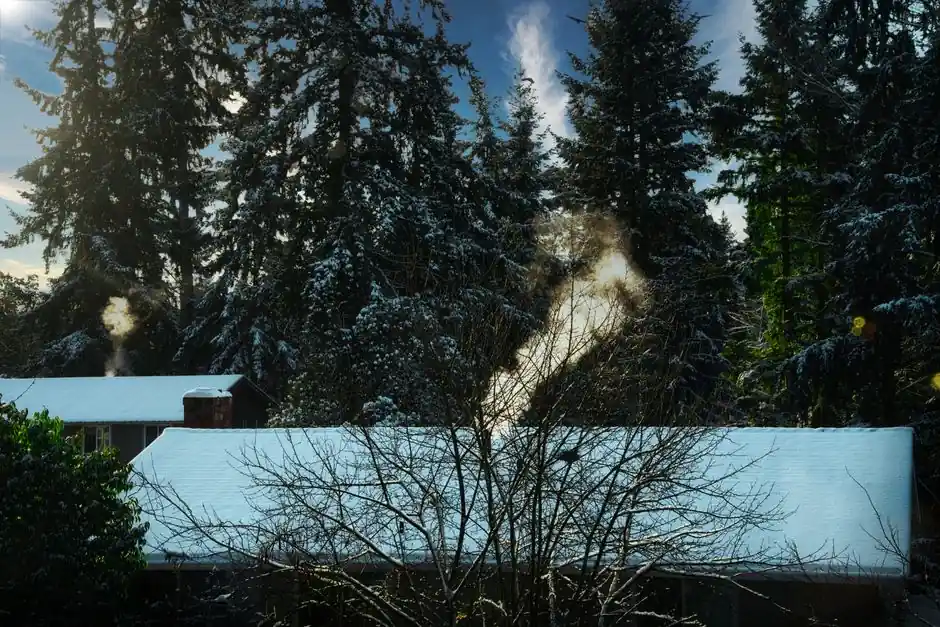
Preparing your roof for winter storms Wilkes-Barre PA is mostly about three things: getting water off the roof, sealing the spots where ice and wind get in, and fixing the small damage that a 30-inch snowpack will turn into a leak. Do those three things before the first hard freeze - usually the first week of November in Luzerne County - and you avoid most of the emergency calls we run in January and February. This post walks through the exact checklist we use on local homes, what it costs in 2026, and the mistakes that send water through ceilings every winter.
Why Wilkes-Barre winters punish roofs
Wilkes-Barre sits in a valley that traps cold air and holds snow longer than the ridges around us. The city averages roughly 40 inches of snow a year, with freeze-thaw cycles that run from late November into March. That combination - snow load, then melt, then refreeze - is what destroys roofs here, not any single storm.
Add the age of the housing stock. A large share of homes in the Heights, Parsons, and the South Wilkes-Barre side were built between 1900 and 1950, and many still carry their original roof decking under two or three layers of shingles. Older decking flexes under snow load. Old flashing pulls away from brick chimneys. Neither problem shows up in July, and both show up fast in a January thaw.
Wind matters too. Nor'easters funnel up the Susquehanna and hit exposed ridges and valleys with 50 to 60 mph gusts. That is enough to lift a lifted shingle tab, peel a ridge cap, or tear a loose gutter section off the fascia. We handle a lot of Wind Damage Roof Repair Wilkes-Barre PA calls in the 48 hours after a storm, and almost every one of them started as a small fastener or sealant failure the homeowner could have caught in October.
How do I prepare my roof for winter storms in Wilkes-Barre PA?
You prepare your roof for winter in Wilkes-Barre by clearing every drainage path, sealing every penetration, and repairing any loose or missing material before the first freeze. Work top-down and finish before the gutters ice over - once they do, you are dealing with ice dam removal, not maintenance.
Here is the order we recommend, and the order our crews work in:
- Clear the roof surface. Sweep off leaves, seed pods, and the walnut and oak debris that piles up in valleys. A clogged valley holds water against the shingles for weeks.
- Clean gutters and downspouts. Flush them with a hose and confirm water actually exits at the ground. If it backs up, you have just built an ice dam starter kit.
- Check the flashing. Chimneys, skylights, vent pipes, and sidewalls are where 8 out of 10 winter leaks start.
- Inspect shingles and ridge caps. Look for cracked, curled, or missing tabs, and for exposed nail heads.
- Look at the attic. Insulation depth and ventilation decide whether heat escapes and melts snow from underneath.
- Trim overhanging branches. A limb that is six feet from the roof in October is on the roof after an ice storm.
Most of that is a Saturday afternoon for a homeowner with a stable ladder and a clear head. The parts that are not - walking a steep 1920s slate or standing-seam roof in the cold - are what we do. If you would rather have it handled in one visit, our Roof Leak Detection and Inspection Wilkes-Barre PA service covers the full checklist and gives you photos of anything that needs attention.
What should I check on my roof before winter in Wilkes-Barre Pennsylvania?
Before winter in Wilkes-Barre, check six specific things: gutter flow, flashing seals, shingle condition, roof penetrations, attic insulation and ventilation, and the soffit and fascia along the eaves. Each one has a cheap fix in October and an expensive one in February.
Gutters and downspouts
A standard 5-inch K-style gutter handles about 1.2 gallons per minute per foot when it is clean. Pack it with leaves and that number drops to nearly zero, which means meltwater sheets over the edge and refreezes on the fascia and the bottom row of shingles. Clear them, then check that each downspout discharges at least three feet from the foundation.
Flashing and penetrations
Chimney flashing, skylight curbs, and vent boots are the highest-risk spots on any roof. Sealant that was fine in June gets brittle at 20°F and cracks. If your chimney has step flashing that has pulled loose from the masonry, that is a leak waiting for the first wind-driven rain. Our Chimney Leak Repair Wilkes-Barre PA work is busiest from December through March for exactly this reason.
Shingles, ridge caps, and valleys
Walk the perimeter with binoculars if you are not comfortable on the roof. Look for tabs that have lost their seal, granules piling up in the gutter (a sign the shingle is at end of life), and ridge caps that have lifted. Valley metal that has rusted through will leak straight into the decking.
Attic insulation and ventilation
This is the part most homeowners skip, and it is the single biggest factor in ice dam formation. You want at least R-49 insulation on the attic floor in our climate zone, and you want soffit and ridge vents that actually move air. If the underside of your roof deck is warm to the touch in January, you are melting snow from below and refreezing it at the eaves.
Soffit and fascia
Wood soffit that has absorbed years of splashback will rot, and rotted fascia cannot hold a gutter under snow load. Run a screwdriver along the fascia board - if it sinks in easily, that section needs replacing before winter. We handle that as part of Roof Soffit and Fascia Repair Wilkes-Barre PA.
Ice dams: the number one winter roof killer here
An ice dam forms when heat escaping through the attic melts snow on the upper roof, the meltwater runs down to the cold eaves, and it refreezes into a ridge of ice that traps water against the shingles. That trapped water backs up under the shingle courses and shows up as a brown stain on your ceiling, usually two to three days after a snow event.
You cannot stop every ice dam, but you can make them far less likely. The fix is almost always attic-side: air-seal the ceiling penetrations (can lights, bath fans, chimney chases), add insulation to R-49 or better, and make sure soffit vents are not blocked by insulation. Roof-side, keep the eaves clear of the first two to three feet of snow after a heavy storm, using a roof rake from the ground - never climb onto an icy roof.
If you already have a dam, do not chip at it with an axe or a hammer. You will punch through shingles and create the leak you were trying to prevent. Call us for Ice Dam Removal and Repair Wilkes-Barre PA and we will steam it off safely and check what it damaged underneath.
Common mistakes homeowners make in November
The same five mistakes show up on almost every winter roof we inspect in Wilkes-Barre. Avoiding them costs nothing.
- Waiting until the first snow to look. By then the gutters are frozen and the leaks have already started.
- Sealing over wet or dirty surfaces. Caulk and flashing sealant will not bond to a damp shingle. It peels off by January.
- Using the wrong sealant. Standard silicone gets brittle below 20°F. You want a polyurethane or a cold-weather-rated roof sealant.
- Ignoring the attic. A perfect roof over a hot attic still gets ice dams. Insulation is half the job.
- Walking the roof in freezing conditions. Every year we get calls from homeowners who slipped on a frosty shingle. Rake from the ground or hire it out.
One more: do not pressure-wash shingles to clean them. It strips granules and shortens the roof's life by years. A soft brush and a garden hose is all you need.
When to call a professional
Call a professional when the work involves a ladder above one story, a roof pitch steeper than 6/12, or anything you cannot see clearly from the ground. Those three conditions cover most of the homes in Wilkes-Barre.
Call us sooner if you see any of these:
- Missing or torn shingles after a wind event
- Daylight visible through the roof deck from inside the attic
- Water stains on ceilings or along the tops of exterior walls
- Ice dams that have already formed at the eaves
- Gutters pulling away from the fascia
Wilkes-Barre Roof Repair Pros handles winter prep and emergency work across the city and the surrounding valley. We give you a written price before we start, and we tell you plainly if a repair can wait until spring. If you want the full service, start with our Emergency Roof Repair Wilkes-Barre PA team - we do the inspection, the prep work, and the repairs in one visit.
Frequently Asked Questions
How do I prepare my roof for winter storms in Wilkes-Barre PA?
Clear gutters and valleys, seal flashing around chimneys and vents, replace cracked or missing shingles, and add attic insulation to at least R-49. Do it before the first hard freeze, which in Wilkes-Barre usually lands in the first week of November.
What should I check on my roof before winter in Wilkes-Barre Pennsylvania?
Check six things: gutter flow, flashing seals, shingle condition, roof penetrations, attic insulation and ventilation, and the soffit and fascia along the eaves. Each takes minutes to inspect and prevents the leaks we see most often in January and February.
Who does winter roof prep in Wilkes-Barre PA?
Wilkes-Barre Roof Repair Pros does full winter prep - inspection, gutter clearing, flashing repair, shingle replacement, and attic assessment. We serve the city and the surrounding valley, and we can usually schedule a pre-winter visit within a week in October and November.
How do I prevent winter roof damage in Wilkes-Barre PA?
Keep water moving off the roof, keep the attic cold, and fix small damage before it spreads. That means clean gutters, sealed flashing, sound shingles, R-49 insulation, and clear soffit vents. Rake the first two to three feet of snow off the eaves after heavy storms.
How much does winter roof prep cost in Wilkes-Barre?
Typical 2026 pricing in this area runs $250 to $500 for a full inspection and gutter clearing, and $400 to $1,200 if flashing or a section of shingles needs repair. Ice dam removal starts around $500 and goes up with roof size and access.
Get help with Emergency Roof Repair in Wilkes-Barre
If winter has already found the weak spot on your roof, we can be on it today - tarping, leak repair, and ice dam removal across Wilkes-Barre and the surrounding valley. One call and we will tell you exactly what it takes to stop the water.
Call Wilkes-Barre Roof Repair Pros at (570) 481-9079.